Free Meta Tag Generator
Fill in your page details and get a complete, paste-ready HTML head block: title, description, canonical, Open Graph, and Twitter Card tags — with live character counts so nothing gets truncated in search results.
The two numbers that matter: keep your title under 60 characters and your description under 158 characters. Google truncates anything longer, cutting your message mid-sentence in search results.
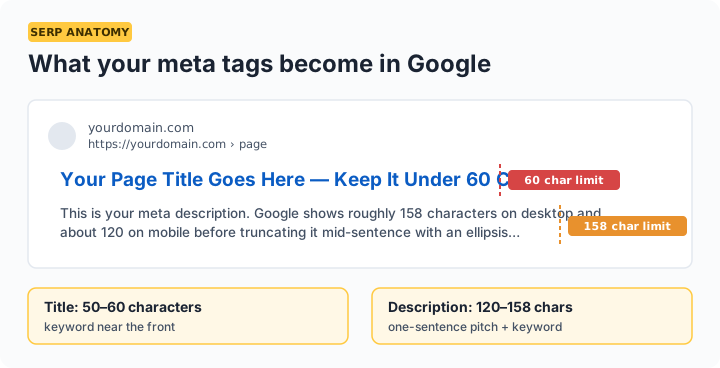
Meta tag length limits at a glance
| Tag | Recommended length | What happens if too long |
|---|---|---|
| Title | 50–60 characters | Truncated with … in Google results |
| Meta description | 120–158 characters | Cut mid-sentence; mobile cuts earlier (~120) |
| og:title | ≤ 60 characters | Truncated on Facebook / LinkedIn cards |
| og:description | ≤ 110 characters | Truncated below the card image |
| og:image | 1200 × 630 px | Wrong ratio gets cropped unpredictably |
Frequently asked questions
What is the ideal meta title length for SEO?
50–60 characters. Google truncates titles over roughly 600 pixels wide (~60 characters). Put your most important keyword near the front.
What is the ideal meta description length?
120–158 characters. Google truncates around 158 on desktop and ~120 on mobile. Write a one-sentence pitch that answers the searcher's question.
Do meta keywords still matter for SEO?
No — Google has ignored the meta keywords tag since 2009, which is why this generator omits it. Invest in your title, description, and content instead.
What are Open Graph tags and why do I need them?
They control how your page looks when shared on Facebook, LinkedIn, WhatsApp, and most apps: preview title, description, and image. Without them platforms guess, often badly. Use a 1200×630 image.
What is a canonical URL and when should I set it?
It tells search engines which URL is the preferred version of a page when duplicates exist (tracking parameters, www vs non-www). Set it on every page, pointing to the clean preferred URL.
Do Twitter Card tags still work?
Yes — X still reads twitter:card, twitter:title, twitter:description, and twitter:image. It falls back to Open Graph if they're missing, but including both gives full control.